Leaving an Abusive Relationship: When There Is No Clear Path to the Exit
Sometimes the hardest part isn't knowing you should leave. It's facing everything you don't know about what happens after you do.
There is an old Eastern philosophy that has always fascinated me.
It suggests that before we ever arrive here — before we take our first breath, before anyone calls us by name — our souls choose certain elements of the life we are about to enter.
Our birthplace.
Our family.
Our circumstances.
Perhaps even some of the lessons we will eventually be asked to learn.
You don't have to believe any of that.
I'm not even sure I do.
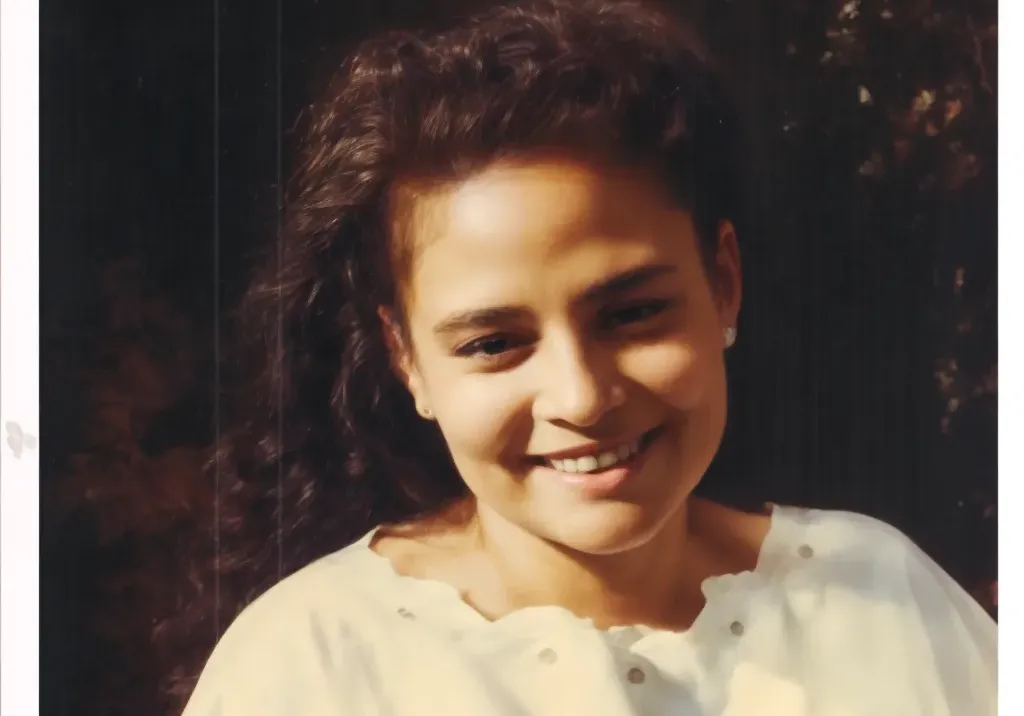
But it certainly helps me explain why, of all the women in all the world, I was born to a woman called Crusita.
My mother.
My first teacher in survival.
And, although I didn't know it at the time, the woman whose life would become a map I would one day desperately need.
Before Crusita Became My Mother
Long before I knew her as Mommy, Crusita was an eight-year-old girl learning a lesson no child should have to learn:
Sometimes the people and things that make you feel safe can disappear.
She was born in Biche, Trinidad, to an Indian mother and Venezuelan father.
Then her mother died following childbirth.
Not long afterward, grief swallowed her father.
The family structure collapsed.
Crusita and her six siblings were left trying to survive a childhood with no reliable home, no steady schooling, and no guarantee about who might take them in next.
Relatives sometimes helped.
Adults sometimes opened their doors.
Luck sometimes showed up.
And somewhere inside that little girl, self-reliance began growing long before she had a name for it.
Maybe that's what happens when life takes away the floor beneath your feet.
You learn to stand before you're ready.
She Thought Marriage Was the Way Out
What Crusita wanted was not complicated.
She wanted a home.
Stability.
Someone who stayed.
So when she met a man as a teenager and saw the possibility of marriage, perhaps she thought she had finally found the door out of uncertainty.
Instead, she walked through another door and found herself trapped again.
Her husband drank.
And when he drank, he abused her.
Mentally.
Emotionally.
Physically.
Year after year.
The home that was supposed to make her feel safe became the place where she learned to listen for danger.
And children came.
Four of them.
Now the question was no longer simply:
"Why don't I leave?"
It became:
Where would I go?
How would I feed four children?
Who would take us in?
How would I earn enough money?
What happens tomorrow morning?
That is the part people standing safely outside an abusive relationship sometimes fail to understand.
We say:
"Why doesn't she just leave?"
As if leaving is merely a matter of locating the front door.
But sometimes a woman can see the door perfectly well.
What she cannot see is what exists on the other side of it.
And the unknown can be terrifying.
“Sometimes a woman can see the door perfectly well. What she cannot see is what exists on the other side of it.”
The Night the Violence Turned Toward Her Children
One night, Crusita heard the familiar signal of trouble.
Her husband had returned from drinking.
She knew this version of him.
The alcohol.
The unpredictability.
The anger.
The violence.
Crusita had endured years of his abuse. But something crossed an unbearable line that night.
His rage was no longer aimed only at her.
It turned toward the children.
Her twelve-year-old son tried to stand between his father and the family—a child trying to become a shield for his mother and his infant sisters.
His father struck him.
And he went down.
Imagine that moment.
A mother who has endured blow after blow herself suddenly watching the violence cross an invisible line and land on her child.
Crusita tried to protect them.
But she was one woman facing a drunk, violent man—a man perfectly comfortable dishing out violence.
She could not overpower him.
She could not negotiate with his rage.
And suddenly the house wasn't merely dangerous.
It had become impossible.
She grabbed her approximately three-month-old baby.
Her injured twelve-year-old son helped carry and support one of his younger sisters.
Her other daughter stayed close to Crusita.
And they fled the house into the night.
No suitcase.
No moving truck.
No apartment waiting.
No savings account large enough to soften the fall.
No carefully constructed five-year plan.
Crusita was not yet planning her future.
She was not thinking about building a new life.
She was not consciously collecting bricks.
She was trying to get four children away from immediate violence.
What were her options?
In that moment, she had nowhere obvious to go.
Imagine the choice becoming that small.
The house or the drain.
The house was known, but the violence had now reached her children.
The drain represented frightening uncertainty, but in that moment it offered something the house no longer did: the possibility of immediate safety.
The Drain
Crusita had four children with her.
Night surrounded them.
She had nowhere obvious to go.
Then she saw it.
A large public drain carrying dirty wastewater away from the city.
Think about what must happen inside a mother for a wastewater drain to look like refuge.
Crusita climbed down into that filthy water with her four children.
She pressed her three-month-old baby tightly against her chest to keep her dry.
Her twelve-year-old son, hurt but protective, helped one of his sisters.
Her eight-year-old daughter stood in dirty water that reached approximately her shoulders, her small hands gripping tightly to Crusita's skirt.
The walls were wet.
The water was foul.
The night was dark.
And the house they had fled was somewhere behind them.
So they became quiet.
Imagine trying to keep a baby quiet when your own heart is hammering against your chest.
Imagine standing in filthy water, afraid to move your foot because you cannot see the bottom and do not know where your next step will land.
These were not children witnessing a heroic reinvention story.
They were frightened children.
The eight-year-old was holding onto the person she believed could protect her:
Her mother.
But who was Crusita holding onto?
She was standing in dirty water she could not see through.
She could not see the bottom.
She did not know where the next step would land.
And somehow, in that moment, even that drain felt safer than the house they had just fled.
Imagine a life where a wastewater drain feels like safety.
Because escape is not the same thing as security.
Leaving is not the same thing as having somewhere to go.
That drain was not Crusita's destination.
It was the space between the life she knew and the life she had not built yet.
And that space can be terrifying.
“The drain was not Crusita's destination. It was the space between the life she knew and the life she had not built yet.”
Morning Did Not Arrive Carrying a Miracle
Eventually daylight came.
Crusita climbed out of that drain.
Four children beside her.
And almost nothing else had changed.
Dawn did not magically solve anything.
She still had four children to protect.
She still had no clear road ahead.
Her financial circumstances had not magically changed overnight.
She still didn't have enough money.
She still had hungry children to feed.
She still needed somewhere safe to live.
She still had to figure out how a woman with limited formal education and four dependent children was going to survive.
This is where inspirational stories sometimes lie to us.
They show the woman walking away.
The music rises.
The sun appears over the horizon.
And somehow we are supposed to believe that because she found the courage to leave, everything after leaving became easier.
It didn't.
Freedom came with bills.
Freedom came with hunger.
Freedom came with uncertainty.
Freedom meant taking whatever honest work she could find.
She cleaned other people's houses.
She scrubbed floors.
She washed dishes.
She worked odd jobs for small amounts of money.
She had to make brutal choices about what she could afford and what she could do without.
But there was one thing those hard days contained that the marriage did not.
Freedom came with uncertainty.

There were no drunken footsteps coming through the door.
No children watching their mother's face to determine whether tonight was going to be dangerous.
No waiting for the next explosion.
The poverty was real.
The uncertainty was real.
But so was the beginning of freedom.
Looking Over the Edge of the Known Into the Unknown
Crusita did not leave because she suddenly knew how everything would work out.
She left without knowing.
That distinction matters.
Because perhaps you are reading this while standing in your own impossible place.
Maybe you already know the relationship is hurting you.
Maybe you have known for years.
But then your mind travels beyond the front door.
And fear begins asking questions.
Where will I live?
How will I pay the rent?
What happens to my children?
What if I cannot support myself?
What if he comes looking for me?
What if I leave and discover I cannot make it?
What if nobody believes what has been happening?
What if I have been away from the workforce too long?
What if I'm fifty?
Sixty?
Seventy?
What if I have spent so many years being someone's wife, partner, caretaker, problem-solver, peacekeeper, excuse-maker and emotional shock absorber that I no longer know who I am without him?
Those fears do not mean you are weak.
They mean you are looking over the edge of the known into the unknown.
And sometimes even a painful known life can feel less frightening than an invisible future.
The Life Crusita Later Built
Some years later, another chapter of Crusita's life began.
She met my father, Wilfred Sennon.
She went on to have eight more children with him. Wilfred provided the stability and loving home that had been absent from her first marriage, giving Crusita the family life she had longed for since her childhood in Biche.
Yet even inside the safety of a loving marriage, Crusita never forgot what dependence had cost her.
She remained fiercely practical about money.
She could calculate figures in her head faster than many people could calculate them on paper.
She saved.
She avoided unnecessary debt.
She invested in her children's education.
And she taught her daughters something I would remember for the rest of my life:
"Man does come, and man does go. But whether he come or go, you as women must be able to take care of yourselves and your children if the situation turns sour."
She wasn't teaching us not to love men.
She was teaching us not to disappear inside loving one.
Then Crusita Started Collecting Bricks
I did not personally witness my mother escaping into the drain.
That story belonged to Crusita's earlier life, long before I was born.
What I did grow up witnessing—day after day, over the course of my childhood—was how Crusita operated.
She strategized. She planned. She saved. She delayed gratification. She made decisions carefully and created options. She refused unnecessary debt, and she accumulated what she needed piece by piece.
This was where the lesson of the bricks was born.
Crusita wanted to build a house.
She didn't have the money to simply call a contractor and say, "Build it." There were no credit cards or easy bank loans financing her dream.
So she bought materials whenever she could afford them.
She bought bricks. Little by little.
I remember going with her to Ayoungchee, the hardware store.
We children would come home carrying bricks for a house that existed only in my mother's imagination.
Those bricks sat outside in the yard.
Rain fell on them.
The Caribbean sun beat down on them.
Time passed.
Some of those earliest bricks sat for years, until moss began growing on them.
Still Crusita waited.
And collected.
And planned.
Until eventually there were enough bricks, and enough savings for the next stage.
Then the house began to rise.
Brick by brick.
I didn't understand what I was watching then.
I do now.
The house wasn't the lesson.
The bricks were.
“The house wasn't the lesson. The bricks were.”
And Then I Became the Woman I Thought I Would Never Be
Here is the uncomfortable part of this story.
After everything Crusita taught me, I thought I understood abuse.
For much of my life, I lived with a personal code—a boundary I felt absolute certainty about. I had promised myself that if a man ever physically hit me, I would never remain under the same roof with him. I had looked at women who stayed after a man physically hit them and thought:
That could never be me.
I had my line.
My boundary.
My certainty.
I knew exactly what I would do.
Or so I thought.
Then physical violence entered my own relationship.
And the woman who had been so certain from the outside became very quiet on the inside.
The promise I had made to myself—that I would never remain under the same roof with a man who hit me—did not prove nearly as simple to enforce when I was the woman actually standing inside the situation. Enforcing that boundary meant dismantling the life I knew.
Knowing where your boundary is in theory and having to enforce that boundary when your own life is attached to it are two very different experiences.
I wrote more about what happened when that boundary collided with my own reality in “The Altar of Compromise”.
That experience humbled me.
Deeply.
I wasn't stupid.
I wasn't weak.
I was afraid.
Afraid of the unknown.
Afraid of starting again.
Afraid of what life would look like on the other side.
When I eventually had to contemplate my own unknown future, I had to learn the same lesson my mother had learned decades before me. I might not be able to see the entire road. But I carried the lessons I had spent a lifetime watching Crusita demonstrate:
Planning.
Patience.
Options.
Self-reliance.
One brick at a time.
Maybe This Is Why I Was Born to Crusita
And so I return to that strange Eastern philosophy.
Maybe our souls choose their teachers.
Maybe they don't.
I cannot prove any of it.
But I know this:
The woman I was given as a mother spent her life preparing me for an examination neither of us knew I would someday have to take.
Crusita taught me that courage isn't always knowing exactly where you're going.
Sometimes courage is admitting you cannot remain where you are.
She taught me that independence isn't built in one magnificent act.
It can be built from tiny, unimpressive pieces accumulated over time.
A dollar.
A skill.
A contact.
A document.
A decision.
A brick.
And another brick.
And another.
Until one day you look around and realize:
You have begun building somewhere to stand.
Start Collecting Your Bricks
If you are in an abusive relationship, I am not going to stand outside your life and tell you:
"Just leave."
I don't know your circumstances.
I don't know your finances.
I don't know whether children are involved.
I don't know whether your movements, money, telephone, computer, or communications are being monitored.
I don't know what leaving might trigger.
I don't know what your safest path looks like.
Everybody's path to the exit is their own.
And sometimes there is no visible path yet.
When Crusita collected bricks, they were real, physical blocks from Ayoungchee hardware store. But for you, sitting where you are today, the bricks are metaphorical—the quiet, practical steps that help you begin creating options.
One brick might be information.
Another might be understanding the finances you were never allowed to touch.
Another might be locating important documents.
Another might be reconnecting with someone you trust.
Another might be learning what resources exist where you live.
Another might be talking confidentially with an appropriate domestic-violence professional.
Another might be understanding your legal options.
Another might be developing a skill that could eventually help you earn money.
Another might simply be allowing yourself to say privately:
"This is abuse."
And another:
"I do not want the rest of my life to look like this."
A dollar. A skill. A contact. A document. A decision. A boundary. An option.
“You don't have to build the entire house today. Start collecting your bricks.”
Please understand: this is not a universal escape checklist. Preparation activities themselves can create serious risk when an abusive partner monitors your phone, computer, bank accounts, location, or papers. If your situation is monitored, trust your instincts and connect confidentially with a qualified domestic-violence professional who can help you build an individualized safety plan tailored to your life.
There May Be No Clear Path From Where You Are Standing
If you are reading this from inside an abusive relationship, I don't know what your exit looks like.
And I will not pretend that Crusita's path should be yours.
Her path led through a wastewater drain.
Mine looked different.
Yours may look different from both of ours.
But not being able to see the entire road does not mean there is no road.
“Not being able to see the entire road does not mean there is no road.”
Sometimes the first step isn't walking out the door.
Sometimes the first step is quietly beginning to believe that another life might exist.
Then learning.
Then preparing.
Then gathering support.
Then collecting whatever bricks are safe and appropriate for your circumstances.
Until someday those bricks become something you cannot yet see from where you are standing.
A foundation.
A choice.
A life.
Crusita eventually left property behind for her children.
Think about that.
The frightened woman standing in filthy water with four children and nowhere obvious to go eventually became a woman who had something substantial to leave behind.
But that was not her greatest inheritance to me.
Her greatest inheritance was knowing that a woman needs options.
And now I understand why.
Because sometimes you cannot see the exit.
Sometimes all you can see is the next brick.
Pick up that one.
— June
Continue Reading from Letters from the Village
- Letter #01: The Altar of Compromise: Stop Breaking the Promises You Make to Yourself — Discover how setting boundaries begins with the promises you keep to yourself.
- Letter #02: 10 Essential Steps to Rebuild Your Life After 50: A Practical Roadmap for Your Next Chapter — The practical operational roadmap for stabilizing your finances, boundaries, and identity.
- June's Story: Read June Sennon's Personal Journey of Rebuilding — From twenty-one years of relationship surrender to independence and purpose.
- Work With June: Explore Ways to Work With Me — Reinvention guidance, personal-development frameworks, and private sessions for women navigating major life transitions.
Related Letters from the Village
You Are Not Starting From Zero: How to Begin Rebuilding After 50 When Everything Changes
The structure you spent decades building may have collapsed, but your wisdom, discernment, and capacity to build remain. Here is how to begin rebuilding after 50.
10 Essential Steps to Rebuild Your Life After 50: A Practical Roadmap for Your Next Chapter
Rebuilding your life after 50 is not one giant courageous leap. It is a sequence of small, deliberate decisions. Here is your practical 10-step roadmap.
The Altar of Compromise: Stop Breaking the Promises You Make to Yourself
Healthy compromise is two people moving toward each other. But there is a point where compromise becomes one person continually moving away from herself. Discover how setting boundaries begins with the promises you keep to yourself.
Rebuilding Pathways & Support
Whether you need private guidance, June's personal reinvention story, or a direct conversation to determine your next steps, explore our pathways.
From Shattered Wings to Soaring Spirit
June Sennon's personal account of walking away from a twenty-one-year relationship with two suitcases and learning to rebuild on granite.
GET THE BOOK ON AMAZON →